
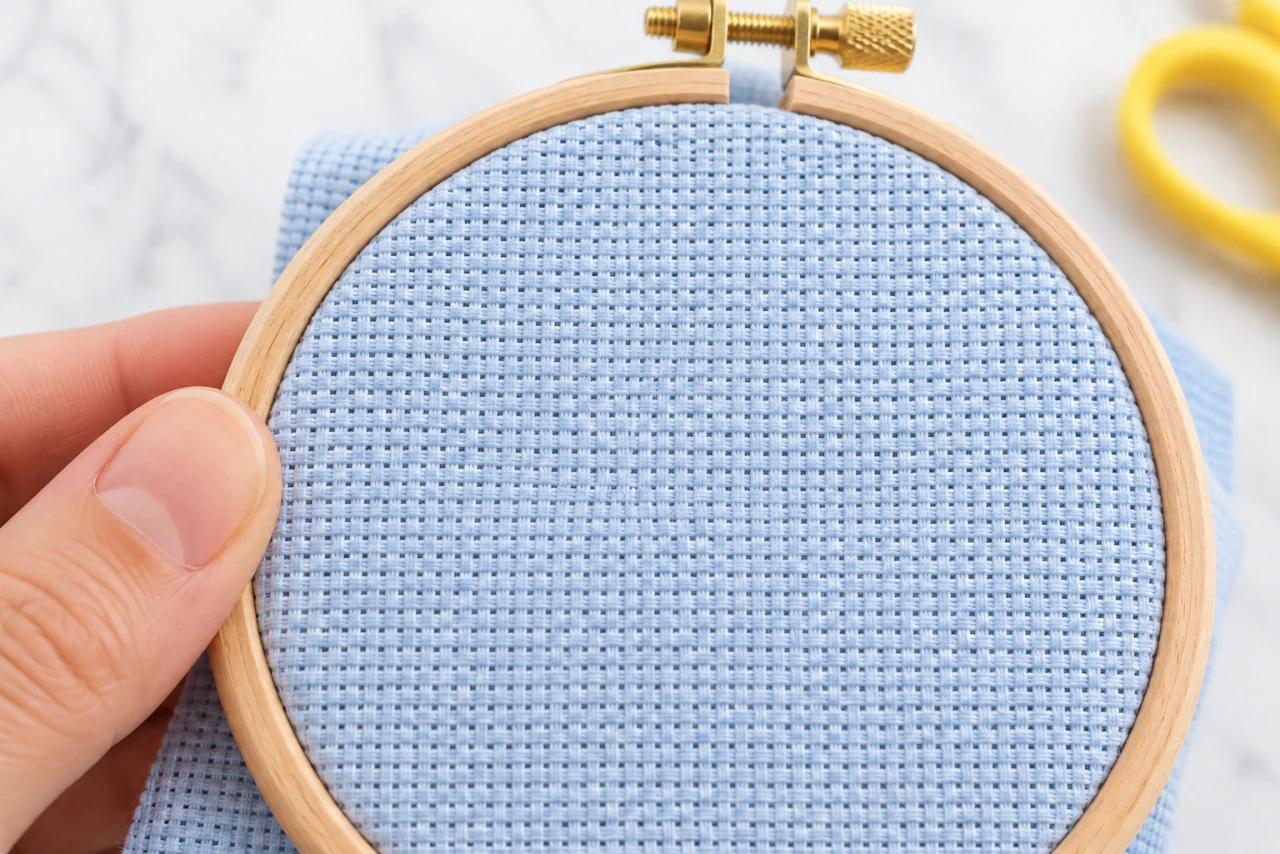
See the stitch and the cloth together
In an even row, the thread lies against the face and the fabric grid stays regular. Check both. A very tight X can look tidy on its own while pulling neighboring holes out of square.
Look across the surface from a shallow angle. A raised loop may be easier to see that way than from straight above. Then look at the reverse for a knot or loop that prevented the last pull from reaching the face.
If you can, compare a completed area after loosening the hoop. Cloth held under strong tension may hide distortion that becomes obvious when released.
Set an even starting surface
Place the inner hoop on a flat surface, lay the cloth squarely over it, and fit the outer hoop. Tighten gradually, easing the fabric around the circle so one side isn't much tighter than the other. Keep the weave lines straight.
DMC's hoop guide describes the problems at either end: loose stitches can lie limp, while overly tight ones can pucker the fabric. Its guidance also recommends taking work out of a hoop rather than leaving it there for extended storage.
Your aim is comfortable support, without pulling the cloth beyond its ordinary square shape. If you hold fabric in your hand instead, support the working area and avoid squeezing or stretching it while drawing the thread through.
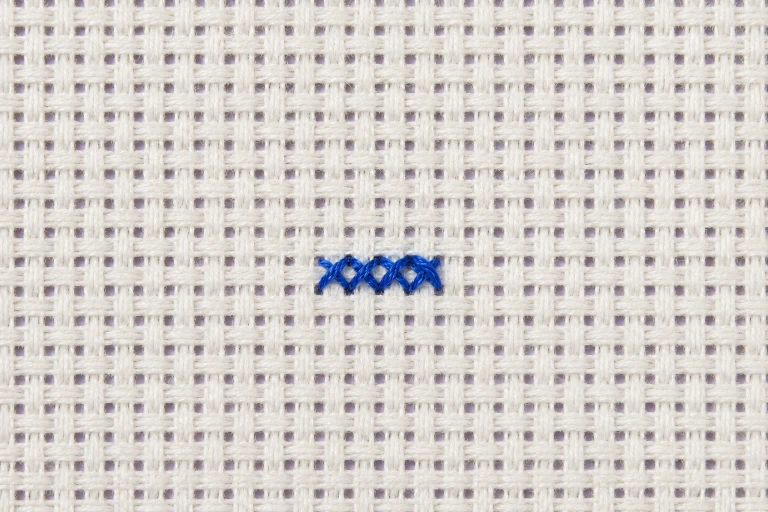
Loose
A loose stitch leg rises away from the cloth.
View original photo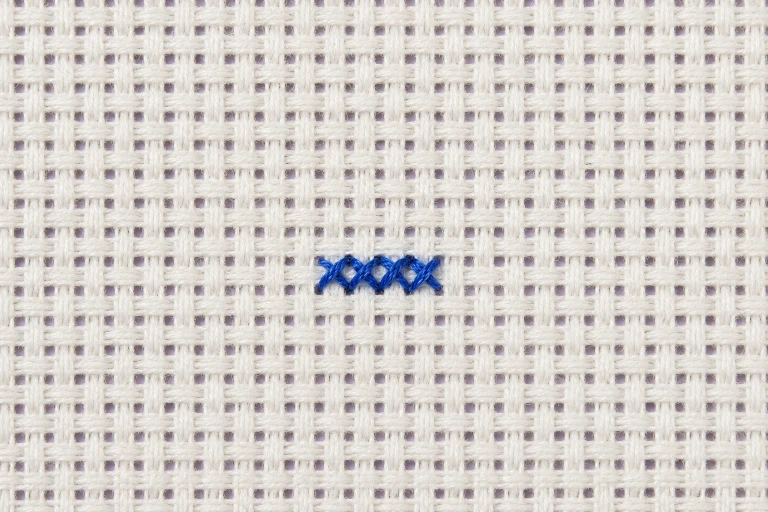
Even
The thread rests against flat cloth, with the weave regular around it.
View original photo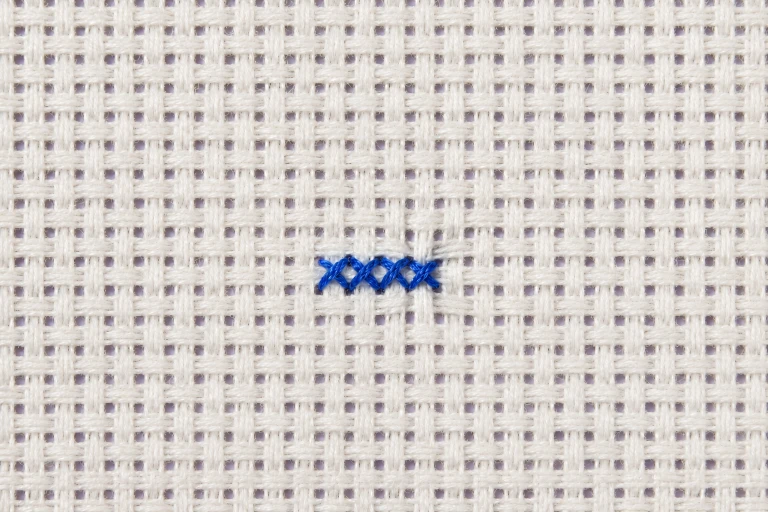
Too tight
Tight stitching pulls the surrounding cloth inward and creates puckering.
View original photoLet each stitch settle
Draw each leg through slowly enough to see when the thread rests on the cloth, then stop without a final tug. If you're learning that feel, try a few crosses on a spare edge.
Keep the working thread clear of the hoop screw and your fingers. A catch can suddenly release as you pull, tightening the stitch more than you intended.
Fix a loose stitch while it's nearby
First check the back. If there's a loop there, gently draw it through in the direction of the working thread. Make sure it hasn't caught under a later stitch or around the needle tail.
If one face leg is loose but the next stitch has already been made, you may be able to ease the excess thread forward through the intervening holes. Use the blunt needle tip with small movements, supporting the fabric. Don't drag the tip across a finished area or pull so hard that you split a strand.
When the looseness is several stitches back, undoing a small run can give you more control than trying to distribute one loop across an entire block. Restore the path and check each stitch as you remake it.
Fix pulled fabric
Stop adding stitches to a puckered area. Ease the most recent thread back a little if you still have access to it. If the fabric relaxes with the thread, that stitch was too tight.
A badly tightened group may need unpicking and restitching. Washing or stretching later is not a dependable way to remove tension built into the stitch path. Protect the fabric, work backward carefully, and check its condition before starting again.
Also inspect a carry across the back. A long carry pulled tight can draw two otherwise neat areas toward each other. When you make that carry again, lay the cloth flat and leave enough thread for its natural span, or finish and restart beside the new area.
When fullness is mistaken for tension
Sparse coverage and loose tension aren't the same problem. If each thread lies flat but you can see fabric between the legs, pulling harder will narrow the stitch and may make coverage worse. Check the recommended strand count and the look you want instead.
Crowded holes and thick crosses may indicate too many working strands or an unsuitable needle. Changing how hard you pull won't make an overfilled hole comfortable. Check strand count and needle fit together.