
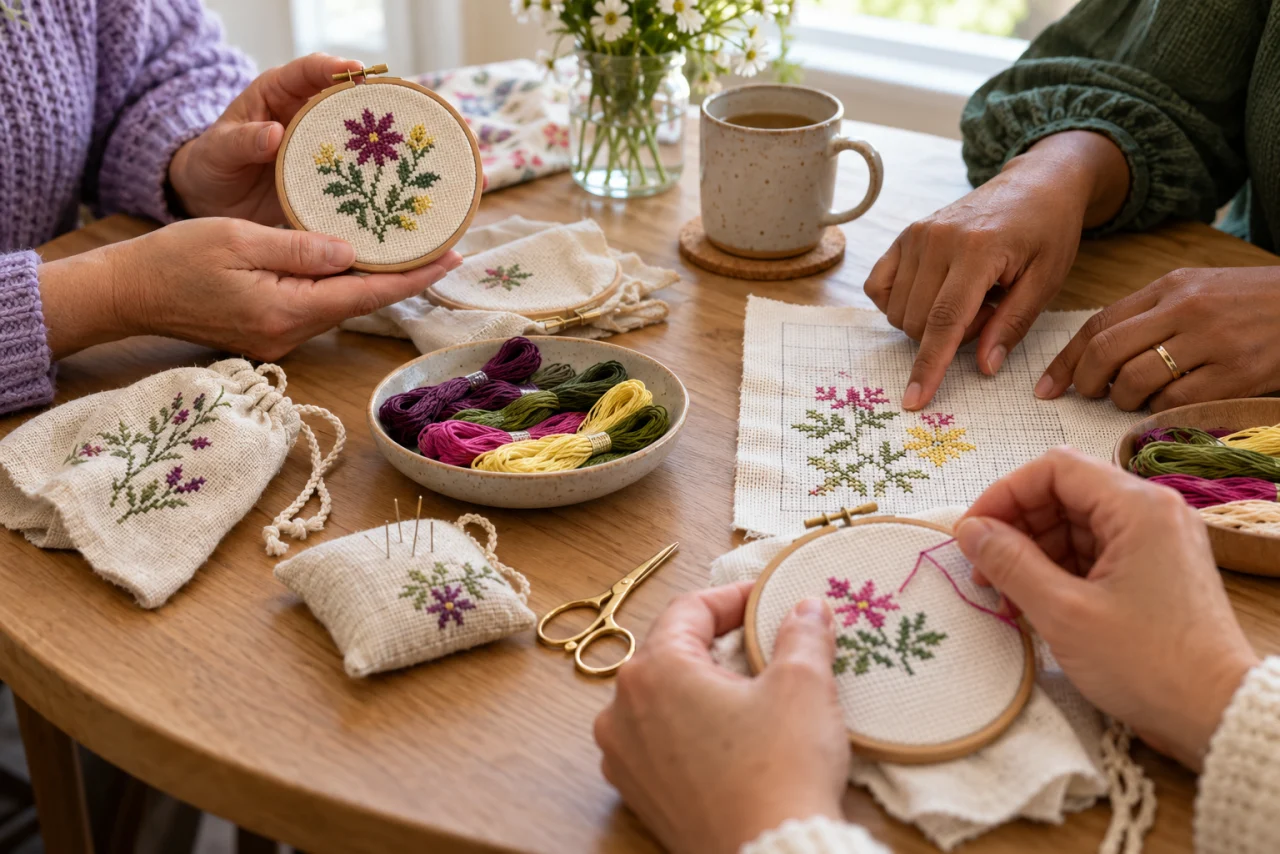
Look for local and online groups
Try your town or region with “cross stitch group,” “embroidery guild,” or “stitch and chat.” Check local needlework shops, libraries, and community-center calendars. A general embroidery group may welcome cross stitch even when it covers other techniques too.
In the United States, EGA's chapter map lets you search by postal code or chapter name. It also links to chapters offering virtual access. Read the individual chapter's current information for the actual meeting arrangements. In other places, use the local or national embroidery organization as a starting point, then follow through to the particular group.
For online groups, browse recent public activity before joining. Look at the questions people ask, how replies are handled, and whether the group has clear rules about advertising, chart images, and progress posts. A large membership number doesn't tell you whether its conversation will suit you.
Ask the practical questions first
Hello, I'm interested in visiting a meeting with a small cross-stitch project. Are guests welcome, and is there a fee or booking step? Could you confirm the next meeting's time and place, what to bring, and whether people usually stitch their own projects?
Add any access detail that affects the visit: step-free entry, lighting, seating, parking, public transportation, or whether you can join remotely. Ask the organizer directly rather than relying on an old photograph of the room. For a video meeting, check the platform, time zone, and whether keeping your camera off is acceptable if that matters to you.
Some groups offer informal stitching; others have a scheduled speaker or workshop. Ask whether help for a beginner is available at the meeting rather than assuming every gathering includes teaching.
Take a project that leaves you room to talk
Bring a small familiar section, its chart and key, labeled working thread, and a case for needles and cutters. A new material or complicated repair can be difficult to manage while you’re getting to know the group. Our travel-kit guide has a compact packing method.
You can introduce yourself with the project: “I'm working on this little border and trying to keep the corners aligned.” That gives someone an easy way into the conversation without requiring a polished finished piece.
If you want advice, name the decision you need help with. Show your own stitches and the relevant small chart area within the designer's sharing rules. Avoid circulating a whole paid pattern as part of the question.
You can visit as a guest where the group allows, then decide whether its pace and conversation suit you. There is room for both lively tables and quiet company; another group may feel more comfortable if the first does not.
Before sharing someone else's project photograph or name online, ask them. Our guide to sharing finished cross stitch covers photos, designer credits, and chart details to keep out of the picture. For an online group, ask before forwarding private messages or sharing another member’s contact details.
If a reminder would help, save the optional first-visit note with the meeting details.