
Make both labels easy to read
Put the brand, range, and shade reference on each holder, then add the current chart symbol. Keep the symbol large enough to recognize beside the chart. If one mark is a circle and the other a nearly closed circle, enlarge or annotate your working key so you can distinguish them comfortably.
Do not rely on printed chart color alone. Similar shading colors can be hard to distinguish on a display or home print, while the symbol remains the exact link to the key. Our chart-reading guide explains that link with a small original example.
You can add a reminder such as “light leaf” or “leaf shadow” beside the number. Keep the exact reference and chart symbol as well.
Keep one loose color beside the work
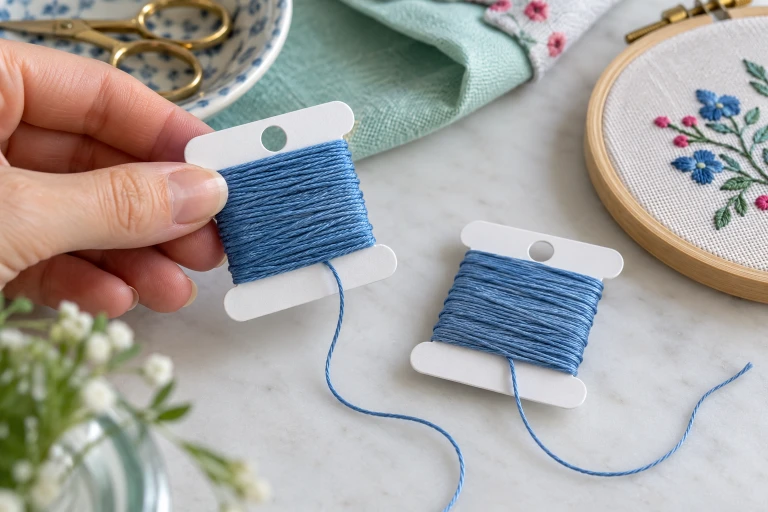
One holder for each shade
Keep each working length with its labeled holder. The shade number and chart symbol help distinguish close colors.
Enlarge photoTake the working strands from one labeled holder and leave that holder beside you. Return spare lengths to it before taking out another shade. A small tray or bag can keep the active color together without filling the table with look-alike pieces.
Catkin and Lillie’s floss-drop method keeps full skeins and spare lengths together. Bobbins and labeled bags work too.
If you park several similar shades
Similar-colored parked threads can be hard to tell apart. Bring each one up at its next starting hole so you can identify it from the chart.
Use the parked cell and its chart symbol to identify each thread when you resume, rather than choosing by apparent color. Store loaded needles securely between sessions.
If the parked threads become hard to track, work with fewer colors at once or finish one color before starting the next.
When two loose lengths get mixed
Stop before making more stitches. Put both lengths aside separately. Compare them with the confirmed material on their holders under the same light, with the strands aligned similarly.
For very close shades, actual thread samples are a better comparison than a screen patch; DMC's FAQ explains the difference. If you still cannot confidently separate the two lengths, leave them unconfirmed and cut fresh identifiable lengths for the project. A little unused thread is easier to manage than a large uncertain section.
Do not merge the mixed pieces into one holder. You can give them temporary labels for a practice project later, using the missing-label approach.