
Check how much fabric you can spare
Lay the cloth flat and identify the design area and the margin around it. Protect a fraying edge before it reduces the margin you need.
If you have already begun stitching, measure the remaining space from the outermost stitches to the sound edge. Include any finishing requirement before deciding whether to remove a fringe or add a folded hem. Our fabric-sizing guide separates the design measurement from the fabric you need to retain.
Hand overcasting: a simple route
Use ordinary sewing thread and a needle that passes comfortably through the cloth. A spare cut edge is a good place to practice. You are securing the fabric edge; these stitches are separate from the decorative cross stitches.
Stitched Modern's edge-preparation guide describes overcasting, folded hems, machine stitching, and other options. Its hand-stitch guidance places the needle well inside the raw edge. Around 6 mm, or ¼ inch, is a useful trial distance if that reaches intact cloth on your piece.
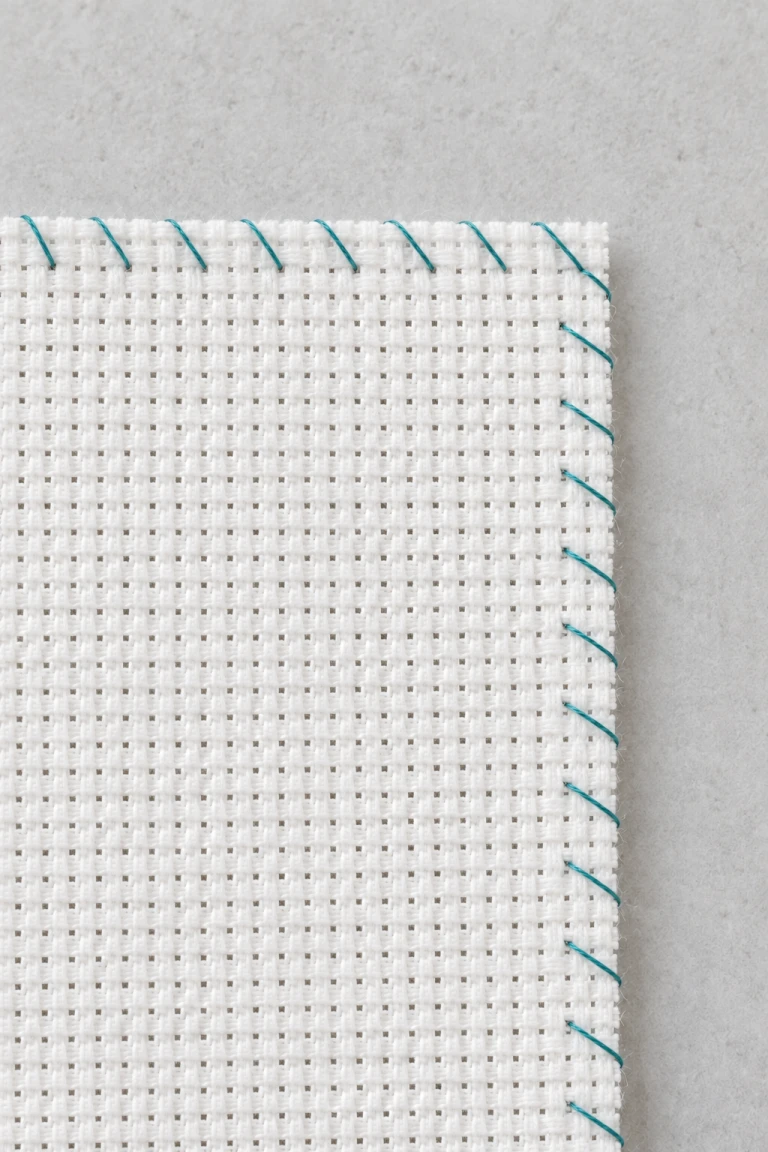
Hand overcasting
Space the wraps along the edge without pulling it tight.
Enlarge photo
- Secure the sewing thread in the spare margin, using a small knot or a few anchoring stitches suitable for the edge.
- Bring the needle through sound fabric a short distance inside the cut edge, using an existing opening where practical.
- Carry the thread around the raw edge and insert the needle again slightly farther along, at a similar distance from the edge.
- Continue wrapping the edge with evenly spaced diagonal stitches. Draw each one snug enough to hold the fringe without curling or gathering the fabric.
- Secure the end in the edge stitching and trim the sewing thread carefully.
Use several intact blocks to support each stitch if the nearest holes are already unraveling. Space the wraps closely enough to hold the edge without gathering it.
Pause after a short section and lay it flat. If it rolls into a cord, loosen your pulling tension. If loose fabric threads can still slide out between widely spaced wraps, bring the next wraps closer together.
A machine finish or folded hem
A machine zigzag or overlock stitch can secure a long edge quickly. Try the settings on a spare piece first and check that the stitch catches the edge without gathering the cloth. Do not let the feed pull the open weave out of shape.
A folded edge with a temporary running stitch can also work when you have plenty of allowance. Keep the fold outside the design and account for the fabric it uses. If the final finish needs a flat raw margin, choose a treatment you can remove or leave outside the necessary area.
For an already short edge, folding more cloth away can make finishing harder. Protect the sound fabric first and review the intended finish before cutting or hemming further.
Using tape or liquid fray products
Tape can hold the edge temporarily, but adhesive residue can remain. If you use it, keep it entirely within a margin you can later remove, while still retaining the fabric needed for finishing. Do not stick tape across stitches or assume peeling it off leaves the cloth unchanged.
Liquid fray products also have specific material, drying, and care instructions. Test the actual product on spare fabric and keep the treated edge out of the decorative area. A sewn option avoids having to guess how an adhesive will behave over a long project.
If a piece has 5 cm beyond the stitches and you remove a taped outer centimeter, only 4 cm remains. Keep any strip you will trim outside the finishing allowance.
Repair a loosening section while there is still sound cloth to catch.