
Check the whole project
Cotton Aida may be washable even when a hand-dyed red thread or metallic detail needs different care. Read each material’s instructions and follow a method they all allow. For a kit, check whether washing would remove a printed guide you still need.
Use the care instructions that fit your piece:
- Ordinary washable cotton fabric and cotton floss: follow their care instructions and a gentle needlework washing sequence.
- Hand-dyed, metallic, embellished, or preprinted work: check the exact materials first. Remove only those accessories designed to be removed.
- An old, fragile, stained, or unknown textile: seek appropriate textile-care advice before wetting it. Weak or brittle threads can be damaged by wet handling.
If the embroidery is attached to cardboard, don’t immerse the assembly. Wash before mounting, or remove the cloth only if you can do so without damage.
Read the instructions for any fabric marker before applying heat. Some marks need removal before pressing; heat can complicate later removal.
Set up before the piece gets wet
Have a clean basin, clean towels, and a flat drying space ready. Set out the mild detergent permitted by the materials’ care instructions. Remove the hoop and temporary accessories. Check the reverse and secure loose thread ends before washing.
The basin should let you support the piece without scrunching it tightly. If a design is larger than the basin, plan how you'll support it while transferring it. Avoid holding a wet textile by one corner and letting the rest hang from that point.
DMC's needlework care guide covers washing, rinsing, drying, and pressing.
Wash gently and watch the water
For washable cotton cross stitch, start with a cold-water rinse. Add a small amount of mild, enzyme-free detergent to clean cold water, then gently hand wash the piece on its own. Use the detergent's hand-wash directions rather than guessing a concentrated dose.
Move the work gently in the water. Don't scrub the crosses together, twist the cloth, or wring it out. If the water takes on color, stop and follow the material maker's guidance rather than continuing to soak or experimenting with hotter water.
Rinse several times in clean cold water until the washing product is removed, keeping the piece supported. Before using a stain remover, identify the mark and check whether the treatment is compatible with the fiber and dye.
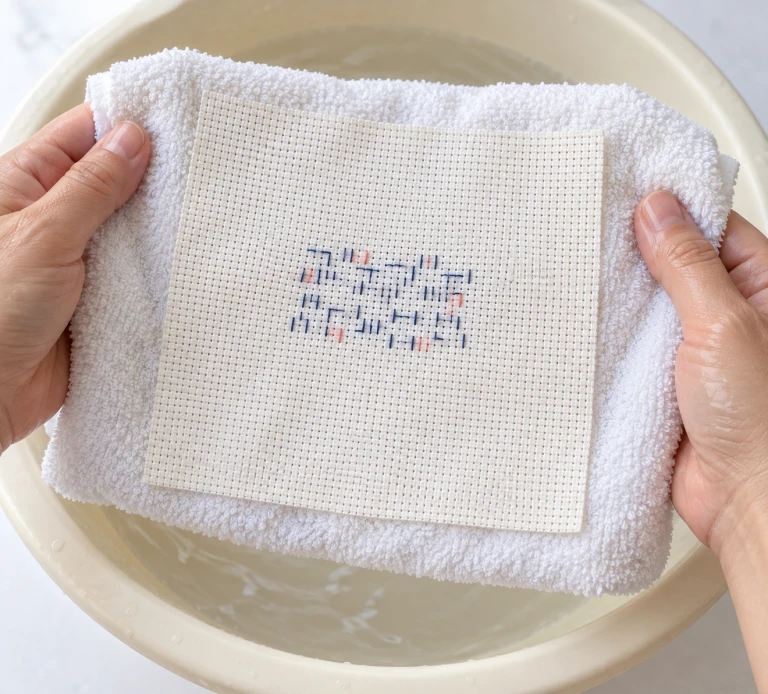
Support the wet fabric
Lift the wet piece with a towel supporting the whole panel.
Enlarge photo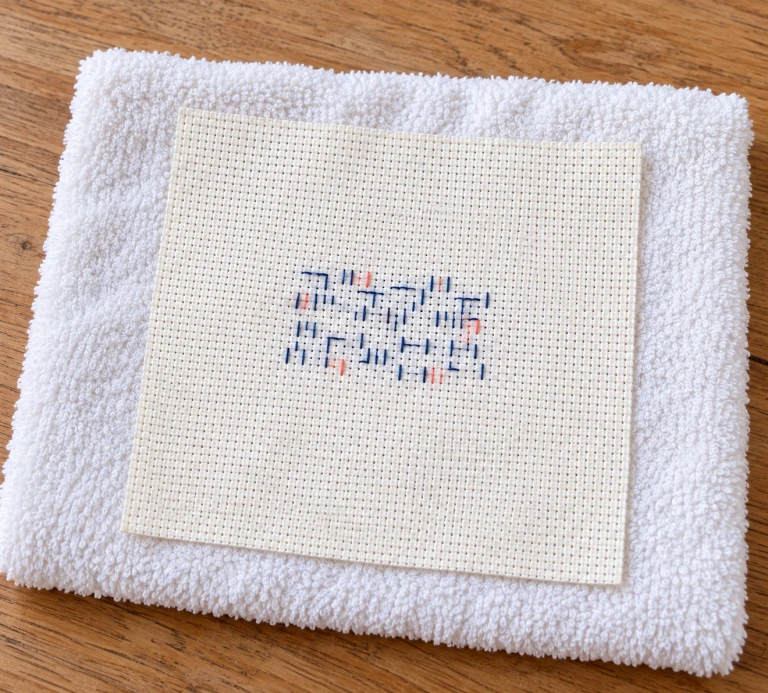
Lay it flat to dry
Lay the piece flat on a clean towel with all four edges supported.
Enlarge photoMove from basin to towel
Lift with support under the piece. Lay it flat on a clean towel, arrange the edges gently, and use another clean towel or a loose towel roll to absorb excess water. Press the towel gently; avoid a hard twist.
Then place the work flat on a dry support with room for air to circulate. Check that the weave sits square before leaving it. Keep the area clean and out of direct strong sunlight. Don't mount damp fabric against card or inside a frame. If the piece will wait before framing, store the finished stitching with support once it is fully dry.
Our pressing guide shows how to smooth the fabric while cushioning the raised stitches.