
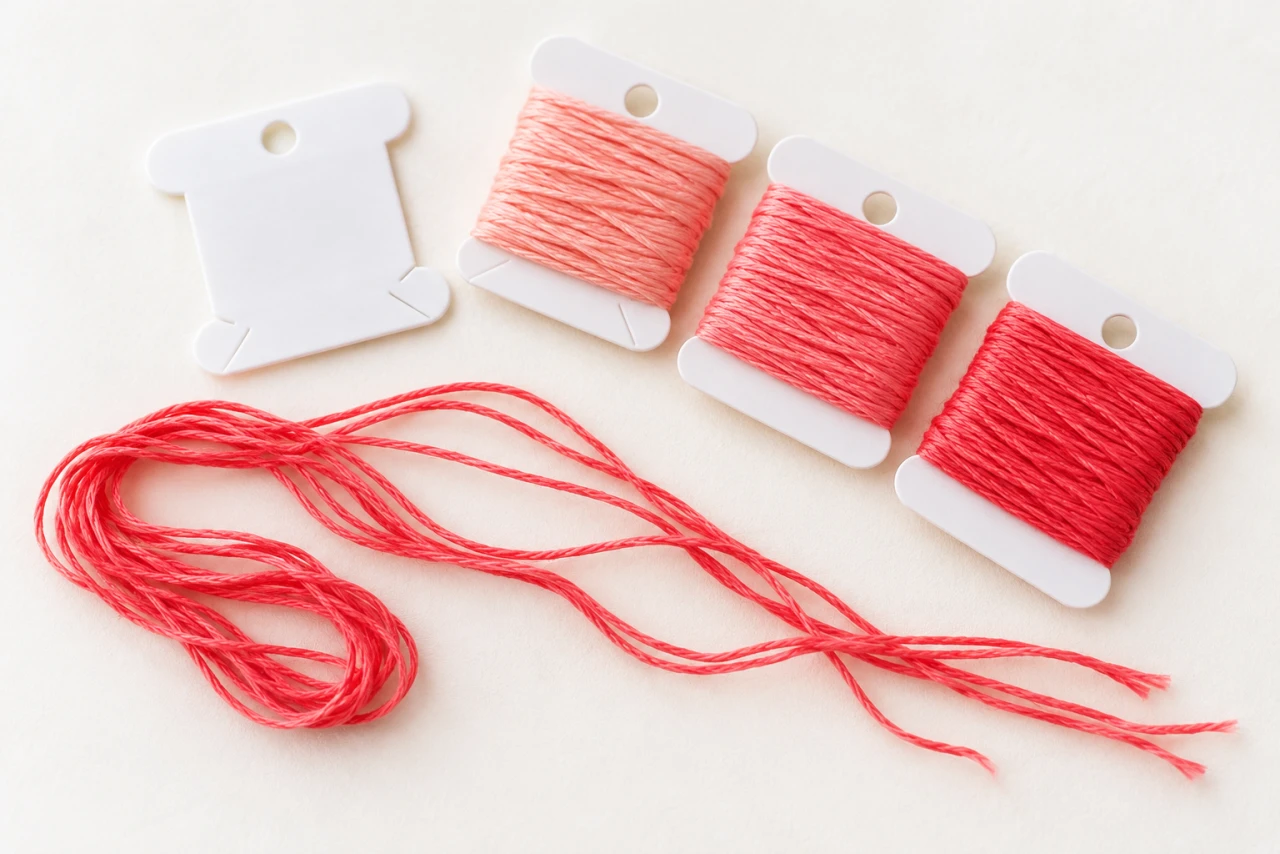
Label the unknown thread
Put the thread in a separate holder or small bag and label it “unknown purple” or another simple description. Keep any known kit or project name with it.
If there are several bundles, keep them apart even when they look alike. They may have different origins or constructions. Combining them now removes information you might still recover.
Check the project records
Look through the pattern key, kit instructions, receipts, and surviving labels. A working-thread list can narrow the possible identities, particularly when every other color is accounted for.
Check whether a number on a card is a kit position or a manufacturer shade. If the seventh hole is marked 7, follow the kit's mapping. Do not relabel it as shade 7 without evidence.
A partly used labeled skein from the same project is a stronger comparison than a screen image. Lay the unknown length beside it and examine the construction as well as the color. Does each separate into the same number of strands? Are the thickness, twist, and sheen consistent? A matching appearance alone still cannot establish that an unfamiliar bundle is the same manufacturer's product.
If you find a reliable label or project record, copy the brand and shade onto the holder and keep the record with it. If it only narrows the choices, keep the uncertainty in the label: “possible shade from project X” is more useful than a confident guess.
Compare the actual threads
DMC's general FAQ recommends actual thread swatches when choosing shades because printed and online color cards approximate the material. Use the appropriate range's physical samples when available.
Lay a short portion of each candidate alongside the unknown length on a neutral surface. Use consistent lighting and view the strands in the same direction. Avoid comparing a tightly wound bobbin with a single loose strand under different shadows.
Try a few stitches in a close candidate on matching spare fabric, especially if you need to continue a uniform area.
This helps you choose a substitute you like, even if you cannot recover the original thread’s identity.
What a phone photograph can and cannot do
A clear photograph can help someone read a damaged label or suggest a broad color family. Use those suggestions to narrow the search; confirm an exact match from the actual thread and surviving records.
If you ask a shop or another stitcher for help, include the known facts: source kit or project, surviving key entries, and whether the thread is divisible. Keep any suggested color match labeled as a possibility until you can confirm its brand and shade number.
Decide how to use the thread
| Intended use | Sensible next step |
|---|---|
| Continuing a large uniform area | Seek confirmed matching material; compare a new labeled skein with the actual work. |
| A small independent motif | Use the unknown length only if you have enough and like its appearance. |
| A practice piece | Keep its temporary name and use it for technique trials. |
| A project with demanding care requirements | Confirm material and care before including it. |
Before adding unknown thread to a washable piece, find out its fiber content and care requirements. A close color match does not establish those details.